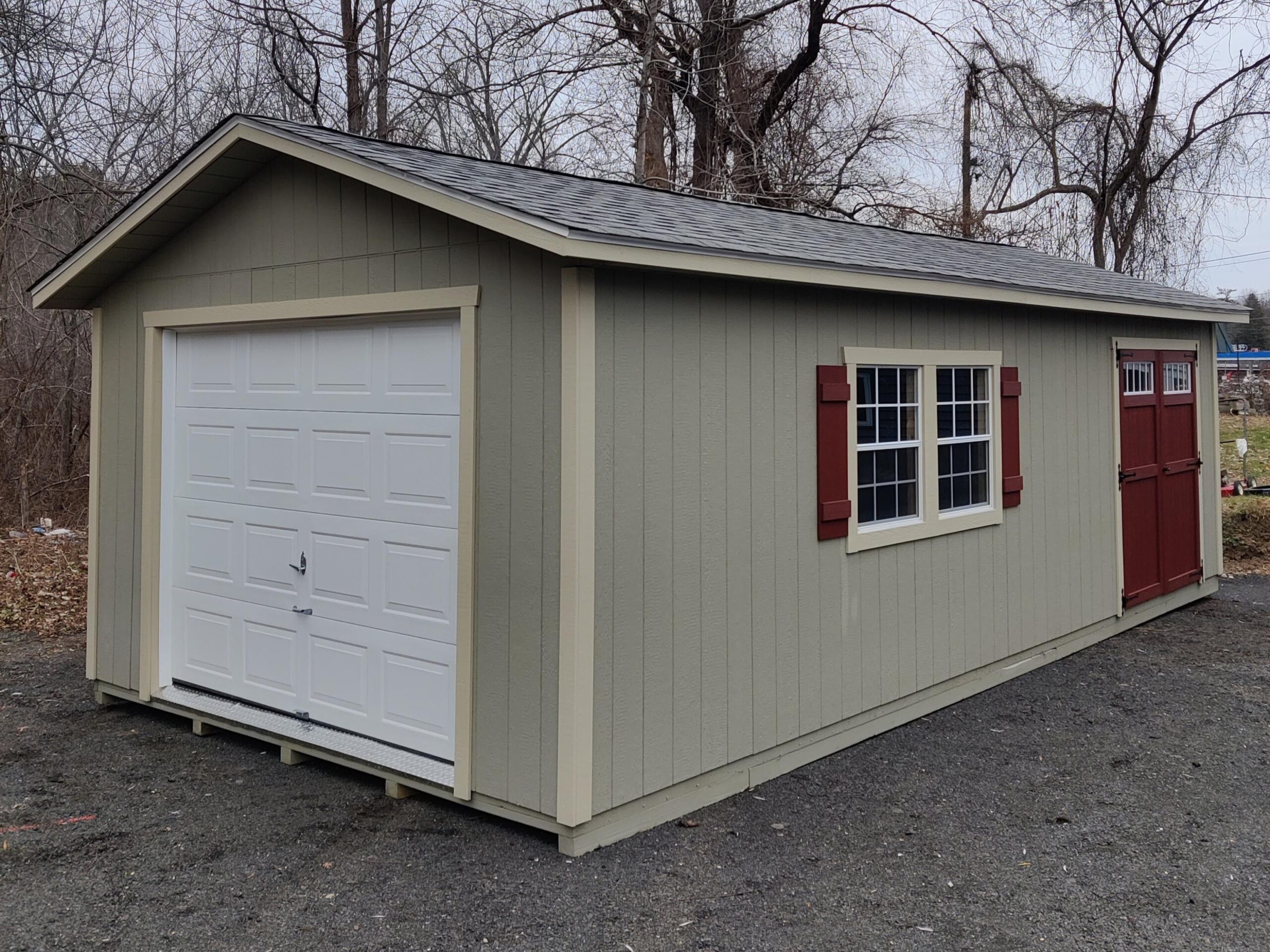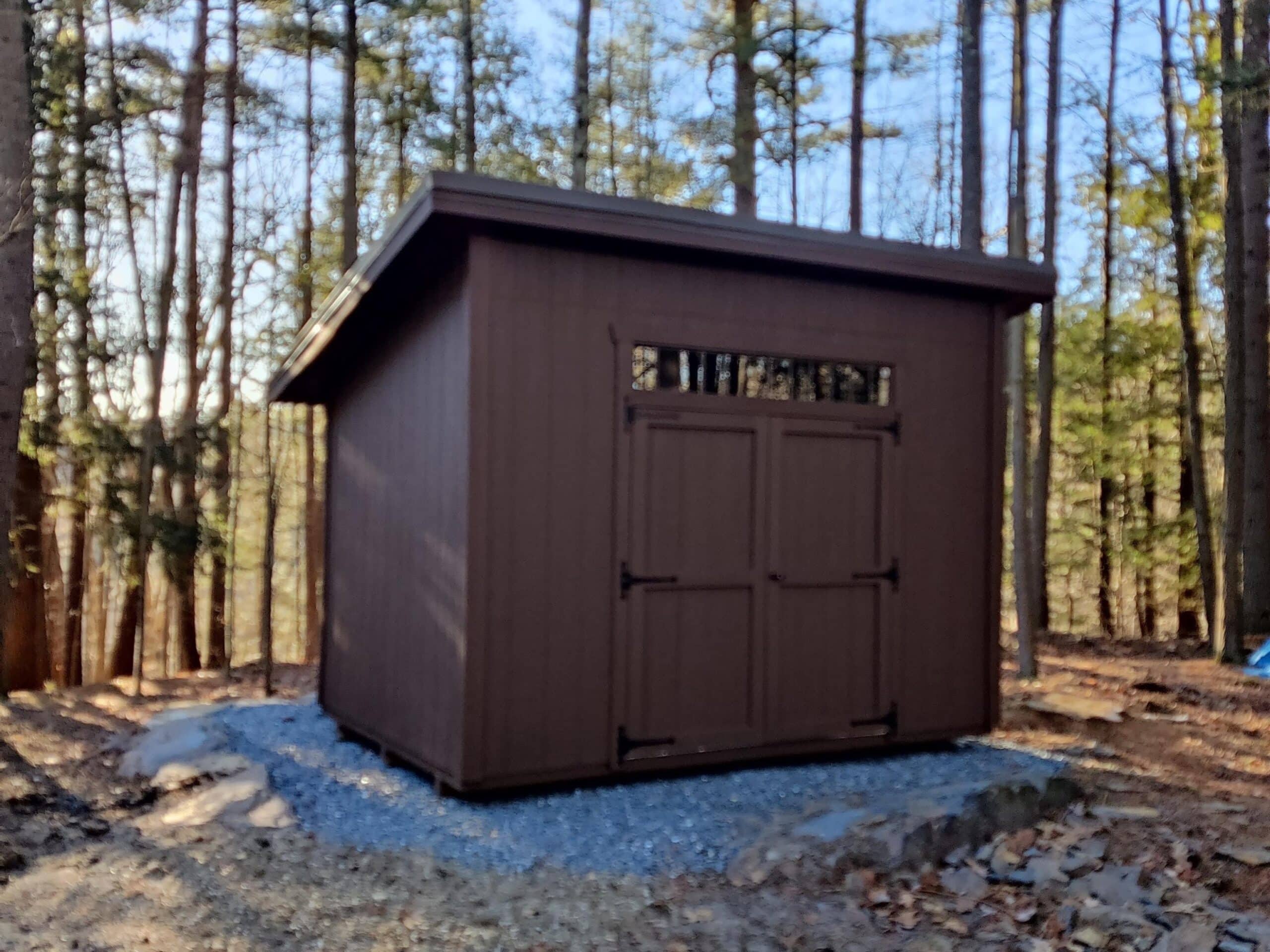
The fairest way to compare any two sheds is size for size — how much building you get for each dollar. By that measure, our Econoline series is the lowest cost per square foot of anything we build. The same approximate footprint, the least money.
Econoline gets there by keeping the package simple: 2×4 rafters, floor joists 16 inches on center, simple 1×3 trim with a T1-11 fascia and 2×4 rake, smaller 18×36 windows, and a double door as standard. It's built locally to the same standards as the rest of our lineup — no shortcuts in workmanship, just no costly extras. If cost is the single most important thing, this is your answer: the largest shed for the least money, period.
← Back to Learning Center
Which Hometown Structures Shed Series Is Right for You? Econoline vs. Keystone vs. New England vs. Homestead
Buying a shed usually comes down to one question: what do you actually need from it? The good news is that our four series line up in a clear progression — from the most economical storage to a rugged, premium-build shed designed for New England winters. Once you see exactly how they're built, the right choice gets a lot easier. Here's the honest, plain-language version of how they compare.
Start With Dollars per Square Foot
Keystone: The Budget Shed That Doesn't Look Like One
Keystone lives in that same budget frame — it just looks nicer. Think of it as everything on Econoline, upgraded.
Floor joists step up from 2×4s at 16 inches on center to 2×4s at 12 inches on center, which makes the floor noticeably more rigid. Instead of plain fascia, you get painted fascia and rake trim boards (vinyl, where the shed is vinyl). Windows step up from 18×36 to a larger 24×36. The rooflines get more decorative — Cape, Ranch, Villa, Quaker, Dutch Colonial, Gambrel — giving you a couple more styles to choose from than Econoline. And customization opens up: custom paint, custom shingles, even customer-supplied paint or vinyl.
Keystone still uses 2×4 rafters, just like Econoline, so pricing stays comfortably in the budget range. If you're watching your budget but don't want the shed to look like a budget shed, Keystone is the sweet spot: trimmed, decorative, with a stiffer floor and bigger windows.
New England: Where Strength and Beauty Come Together
This is where you get the best of both. New England is our best-of-the-best series — the one you pick when you want both curb appeal and rugged strength, blended into one shed.
Here's the reason it's built the way it is. New England isn't just a name: property values here run higher than much of the country, and so does the weather. Snow loads in New England are heavier than in many other parts of the country, so we frame every New England series shed with 2×6 rafters — a step almost no other shed maker in the Northeast takes (nearly everyone else uses 2×4). Those rafters, combined with floor joists 12 inches on center, carry the roof through real New England winters.
The curb appeal side is built in too. Deep roof overhangs add visual weight and also do a real job: they push the drip line well away from the walls, so when water runs off the roof, it drains into that clean stone farther from the building — not down the side of your shed. Add painted fascia and rake trim, our largest windows at 30×36, and a double door plus single door standard (the Country style is the one exception, since its walls are too short for a side door), and you have a shed that's beautiful on the outside and simply stronger underneath.
When only the best will do, this is the series.
Homestead: The New England Shed, On Steroids
Everything true of New England is true of Homestead, and everything true of Homestead is true of New England. Same 2×6-rafter framing — stepping up to 2×8 on the widest models — same deep overhangs, same 2×4 floor joists at 12 inches on center, same large 30×36 windows, same double-plus-single door standard, same full range of customization. The difference is size. Homestead just takes it bigger.
And that's exactly why you'll see us do a little on-site assembly on Homestead sheds. These are New England-grade sheds that are simply larger than what can be delivered to your property in one piece. The maximum width that can travel on the road is 13.5 feet — beyond that, it's a modular build or a build done on-site. Most Homestead sheds are modular: either a double-wide that arrives in two halves and gets bolted together at your property, or a shed with a hinged roof section that's folded into place on-site.
Take a 20×20 Berkshire, for example — it comes in two halves and we bolt them together where it lands. Or a 12×20 Hampshire: the roof is so steep the building is too tall to transport as one piece, so the roof system folds down for the ride and goes back up on-site. Same rugged construction, same aesthetic beauty as New England — just a bigger shed for more space.
What You're Actually Paying For (and What You're Not)
One thing we hear from customers shopping online: it's hard to tell whether you're paying for real build quality or just a name. That's fair. Here's how we keep it honest — every difference between our series is spelled out above, in plain terms, and every price is published on this site in dollars. There are no hidden fees and no premium upcharge on standard framing.
When you move up a tier, you're getting a real, measurable upgrade: bigger rafters, a stiffer floor, better trim, larger windows. When you stay with Econoline, you're saving real money — not paying for features you don't need.
When you move up a tier, you're getting a real, measurable upgrade: bigger rafters, a stiffer floor, better trim, larger windows. When you stay with Econoline, you're saving real money — not paying for features you don't need.
The Quick Way to Decide
Here's the short version.
When cost matters most — Econoline. The lowest cost per square foot we build. The largest shed for the least money, dependable and no-frills.
Budget, but make it pretty — Keystone. Still in the budget frame, but trimmed, decorative, with a stiffer floor, bigger windows, and more styles.
Strength and beauty, when only the best will do — New England. 2×6 rafters built to carry New England snow, deep overhangs, large windows, and a second door standard. Very few sheds in the Northeast are built like this.
The same build, super-sized — Homestead. Our largest sheds: the rugged 2×6-rafter build (and up) in footprints that split in two or fold down for delivery, then go together on-site.
No matter which series fits, our pricing is fully online — delivered fully assembled or built on-site, in T1-11 or vinyl. Price your exact shed in minutes, or call us and we'll be straight with you about which build makes sense for your budget and your property.
Frequently Asked Questions
Econoline is the lowest cost per square foot of any series we build — size for size, you get the largest shed for the least money. It's a simple, dependable package: 2×4 rafters, floor joists 16 inches on center, smaller 18×36 windows, and a double door standard.
Keystone is the step up: 2×4 floor joists 12 inches on center instead of 16 (a noticeably stiffer floor), painted fascia and rake trim instead of plain fascia, larger 24×36 windows, more decorative rooflines, and customization like custom paint and shingles. Both use 2×4 rafters — the step up to 2×6 comes with New England and Homestead.
New England snow loads. 2×6 rafters carry heavier roof loads than the 2×4 rafters that most other shed makers use, and our New England series combines them with deep overhangs and 2×4 floor joists set 12 inches on center to stand up to our winters. It's a premium build that very few companies offer in a shed.
They're built the same way — 2×6 rafters (up to 2×8 on Homestead's widest models), deep overhangs, 2×4 floor joists at 12 inches on center, large 30×36 windows, and a double plus single door standard. Homestead is simply our larger series: the biggest footprints, workshops, and second floors.
Yes — a single door is available as an add-on on Econoline and Keystone. On New England and Homestead sheds, a double door plus a single door comes standard (the New England Country style is the only exception, since its walls are too short for a side door).
Both are solidly built with the same 2×4 floor joists set 12 inches on center, painted trim, and quality sheathing. The main difference is the roof: Keystone uses 2×4 rafters, while New England (and Homestead) use 2×6 rafters for heavier snow loads. If you're on a steep-pitch property or want maximum headroom for a second floor, the 2×6-rafter series earns its keep.
Get a Written Quote on the Right Shed for You
Not sure which series fits your budget and your property? Call 413-562-7171 or use our price-it-yourself tool — it shows every series, every size, and every option in dollars. We'll be straight with you: no upsell, no pressure. Just honest guidance from people who build sheds in New England for a living.